
“I have been doing crunches for months. My abs are stronger, but my stomach still has fat. So what exactly is the point?”
I hear this kind of question all the time. And honestly, it is a fair question.
For years, we have been told that spot reduction is a myth. You cannot choose where your body loses fat, so doing hundreds of crunches will not specifically burn the fat around your stomach.
But then there is another question. If you train a particular muscle regularly, does that work have absolutely no effect on the fat around that area?
The answer is not as simple as “yes” or “no.” Let’s take a closer look.
What Do We Mean By Spot Reduction?
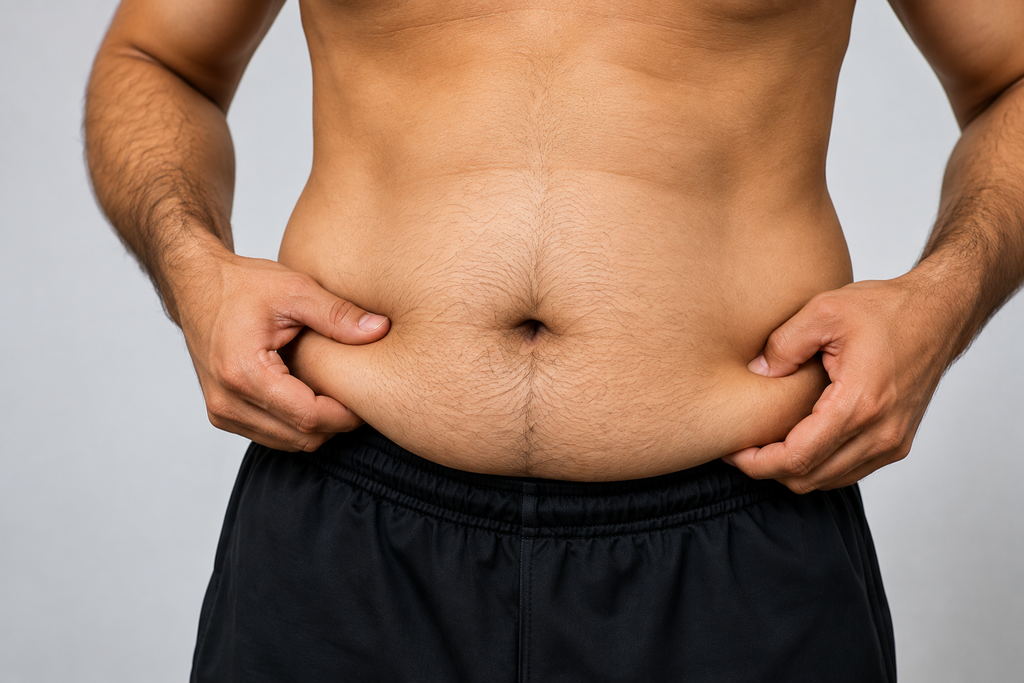
Spot reduction simply means trying to reduce fat from one particular part of the body by exercising that area.
For example, someone wants to lose belly fat, so they start doing 200 crunches every day. Someone wants slimmer thighs, so they do hundreds of squats. Someone wants slimmer arms, so they spend more time doing arm exercises.
The idea is understandable: work the area, then burn the fat from that area.
But your body does not work quite that neatly.
When you lose body fat, your body is drawing energy from its stored fat, and the amount and order in which different areas lose fat can vary from person to person.
Genetics, hormones, age, sex and other individual factors all influence where your body stores and mobilizes fat.
That is why two people can follow almost the same diet and exercise routine and see very different changes in their stomach, hips, arms or face.
So yes, you cannot simply command your body to remove fat from one particular place. But that does not necessarily mean the muscle you are training is irrelevant.
So… Does Spot Reduction Exist After All?
This is where I don’t want to give you the usual internet answer. Because science is rarely that black and white.
A 2023 randomized controlled trial looked at this exact question.
Researchers studied 16 overweight adult men for 10 weeks. One group performed treadmill running together with abdominal endurance exercises, including torso rotations and abdominal crunches. The other group performed treadmill running alone.
The researchers measured regional fat using DEXA.
Interestingly, the group doing the abdominal exercises experienced a greater reduction in trunk fat than the running-only group.
The authors concluded that their results supported the existence of localized fat reduction under the conditions of their study.wohu…
Now, before you get excited and start doing 500 crunches tonight, there is something important you need to understand.
This does not prove that crunches alone will melt your belly fat.
It was a very small study, with only 16 men. And the abdominal group was not doing crunches alone. They were doing treadmill running, torso rotation and abdominal crunches as part of a longer exercise session.
So we cannot take this one study and say, “Do crunches and your belly fat will disappear.” That would be going much further than the evidence allows.
But it does give us an interesting reason to question the statement that localized exercise can never have any localized effect. And I think that is a much more honest conversation
Then Why Do Crunches?

This is probably the question you really want answered.
If crunches don’t guarantee that the fat sitting over your stomach will disappear, why bother doing them?
Because fat loss and muscle development are two different things.
When you train your abdominal muscles, you are giving those muscles a reason to adapt. They can become stronger. They can become more developed. Your ability to control and stabilize your trunk can improve.
And if you eventually reduce enough body fat, those developed abdominal muscles can become more visible.
Think of it this way: your abdominal muscles are underneath the fat. You can train the muscle underneath while working on reducing the fat above it.
That’s why I don’t like the message that says, “Crunches don’t burn belly fat, so don’t waste your time doing them.”
That’s not a very useful way to look at exercise.
Crunches are not useless. They just have a job to do.
Their job is to train your abs. Your overall exercise, nutrition and lifestyle have a much bigger role in determining how much body fat you carry. And potentially, as the research above suggests, training a particular region may also influence local fat metabolism to some degree.
But Let’s Not Forget the Bigger Picture
Here’s where people often make a mistake.
They hear that abdominal training might help the abdominal area and immediately go back to doing 300 crunches while ignoring everything else.
That’s not the answer either.
If you want to reduce belly fat, you still need to think about your whole body.
Walk more. Do cardiovascular exercise. Strength train. Eat in a way that supports your goals. Get enough protein and fiber. Sleep properly. And most importantly, create habits that you can actually maintain. The CDC recommends adults get at least 150 minutes of moderate-intensity aerobic activity each week and muscle-strengthening activity on at least two days a week.
What About Food?
This is the part nobody wants to hear because it isn’t as exciting as a new belly-fat exercise.
But what you eat still matters enormously.
You don’t need to completely remove rice. You don’t need to stop eating roti. You don’t need to live on salads. And you definitely don’t need a magical “belly-fat burning” drink.
A sustainable eating pattern built around nutritious foods, adequate protein, vegetables and fruits, whole grains, healthy fats and appropriate portions is much more useful than jumping from one extreme diet to another.
The goal isn’t to find one food that burns belly fat. The goal is to create an eating pattern that helps you manage your overall energy intake while still giving your body the nutrition it needs. Because you cannot out-crunch an eating pattern that consistently gives your body more energy than it needs.
And Please Don’t Ignore Walking

Walking doesn’t look impressive on Instagram.
Nobody is going to make a dramatic transformation video because they walked around their neighbourhood for 30 minutes.
But it works beautifully because you can actually do it regularly.
Walking increases your daily physical activity without making your life revolve around exercise.
When you combine regular walking with strength training, some cardiovascular exercise and sensible nutrition, you have a much more complete approach to fat loss. You don’t need to destroy yourself every day. You need to move consistently.
What About Sleep and Stress?

Yes, they matter too.
Weight loss isn’t happening in a body that exists separately from the rest of your life.
If you’re sleeping badly, constantly stressed, exhausted and hungry, following a very restrictive diet becomes much harder.
Sleep affects appetite, food choices, recovery and your ability to stay active. Stress can also influence eating behaviour, sleep and activity, and chronic stress is associated with obesity and abdominal fat through several complex pathways. That doesn’t mean “high cortisol equals belly fat” in a simple one-to-one way, but stress is still worth taking seriously.
So Should You Do Crunches?
Yes.
If you enjoy them and they are appropriate for you, train your abs. Do crunches. Try other core exercises. Make your abdominal muscles stronger.
But don’t expect one exercise to do everything. If your goal is a leaner, more defined stomach, think about it as two things happening together:
BUILD THE MUSCLE.
REDUCE THE EXCESS BODY FAT.
And perhaps the science will continue to teach us more about how much local exercise can influence local fat loss.
For now, what we can say with confidence is that abdominal training has value, overall fat loss matters, and the simple statement “spot reduction is impossible, end of story” doesn’t capture all of the evidence. And I am glad spot reduction is debatable .
What About Those Belly-Fat Tricks?
This is where I would be much more suspicious.
A tea that promises to melt belly fat. A detox drink. A waist trainer. A supplement claiming to target your stomach. A cream that supposedly burns abdominal fat. A workout promising a flat stomach in seven days.
These claims sound attractive because they give you the feeling that there is a shortcut. But real changes in your body usually come from much less exciting things done repeatedly
Good food. Regular movement. Strength training. Enough sleep. Consistency. And time.
You don’t need to punish your stomach to change it.
Your Waist Is More Than Just a Cosmetic Issue
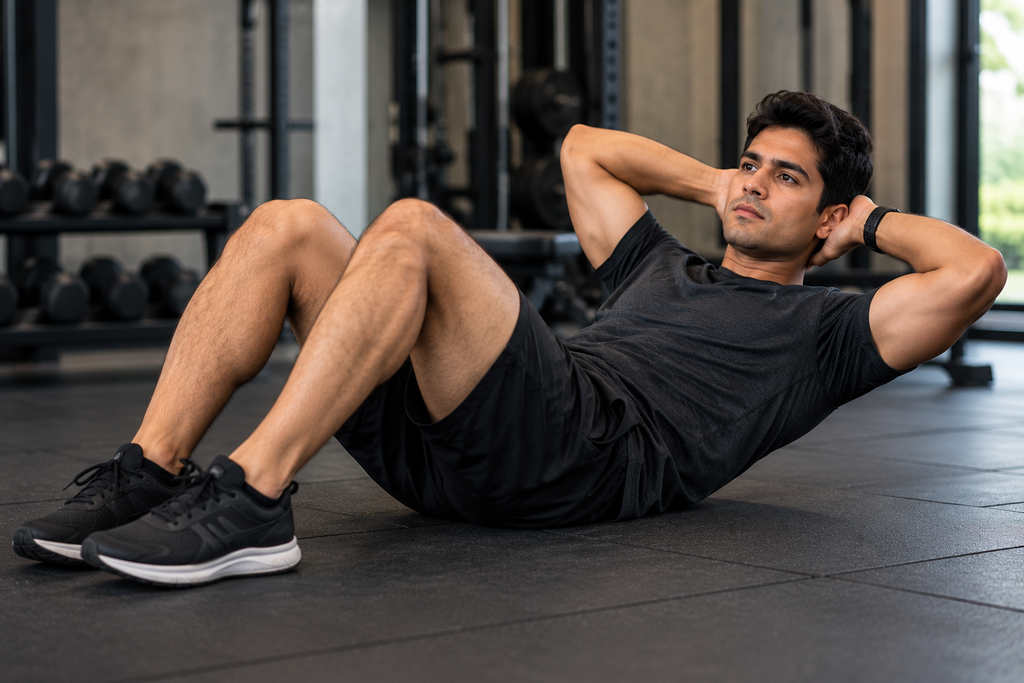
There is another reason we should talk about belly fat. It’s not only about how your stomach looks in the mirror.
Excess fat around the abdomen, particularly visceral fat around internal organs, is associated with increased health risks. Waist circumference can therefore provide useful information alongside other measures such as BMI and overall health assessment.
This is especially important because looking thin doesn’t automatically mean being metabolically healthy, and having some belly fat doesn’t mean something is wrong with you. Your body is not a before-and-after photograph. Health is bigger than appearance.
Don’t Obsess Over the Mirror Every Morning
One of the most frustrating things about belly fat is that changes can be slow.
You may eat well for a week and wake up looking exactly the same. Then you have a few days where your stomach looks different. That’s normal.
Body weight and appearance can change temporarily because of water, digestion, sodium, carbohydrates, hormonal fluctuations and other factors. So don’t judge your entire progress based on what your stomach looks like on one particular morning.
The Biggest Mistake? Trying to Lose It Too Fast.
This is where I think many people make the problem harder than it needs to be.
They want the belly gone immediately.
So they cut calories aggressively. Start exercising twice a day. Remove every food they enjoy. Do hundreds of crunches. Buy supplements. And try to maintain a lifestyle that they realistically cannot maintain for more than two weeks.
Then they feel like they have failed.
But maybe the problem wasn’t that they weren’t disciplined enough. Maybe the plan was simply too extreme. Healthy weight loss is generally more successful when it is gradual and sustainable, rather than based on extreme short-term restriction.
The Belly Is Not the Enemy
I want you to remember this.
Your stomach is not something you need to fight every morning when you look in the mirror.
If you want to lose belly fat, that’s completely fine. If you want stronger abs, that’s also completely fine. But don’t turn the process into a daily punishment.
Train your abs because you want stronger abs.
Move your whole body because you want a stronger, healthier body.
Eat well because your body needs good nutrition. And give your body enough time to respond.
Maybe spot reduction isn’t as simple as YES or NO.
But one thing I don’t think we should lose sight of is this: THE MUSCLES YOU TRAIN MATTER.
So train them. Just don’t expect one exercise to carry the entire responsibility for your transformation.
Research Corner
- Brobakken MF, et al. “Abdominal aerobic endurance exercise reveals spot reduction exists: A randomized controlled trial.” Physiological Reports, 2023. PMID 38010201; DOI 10.14814/phy2.15853.
- CDC. “Physical Activity and Your Weight and Health.” Current guidance: adults need at least 150 minutes of moderate-intensity aerobic activity weekly and at least 2 days of muscle-strengthening activity.
- CDC. “Tips for Healthy Eating for a Healthy Weight.” Emphasizes nutrient-dense foods, protein, vegetables, fruits, whole grains and healthy fats, while limiting added sugars and highly processed foods.
- NIDDK. “Am I at a Healthy Weight?” Waist size and BMI can both provide useful information about weight-related health risk.
What This Means For You
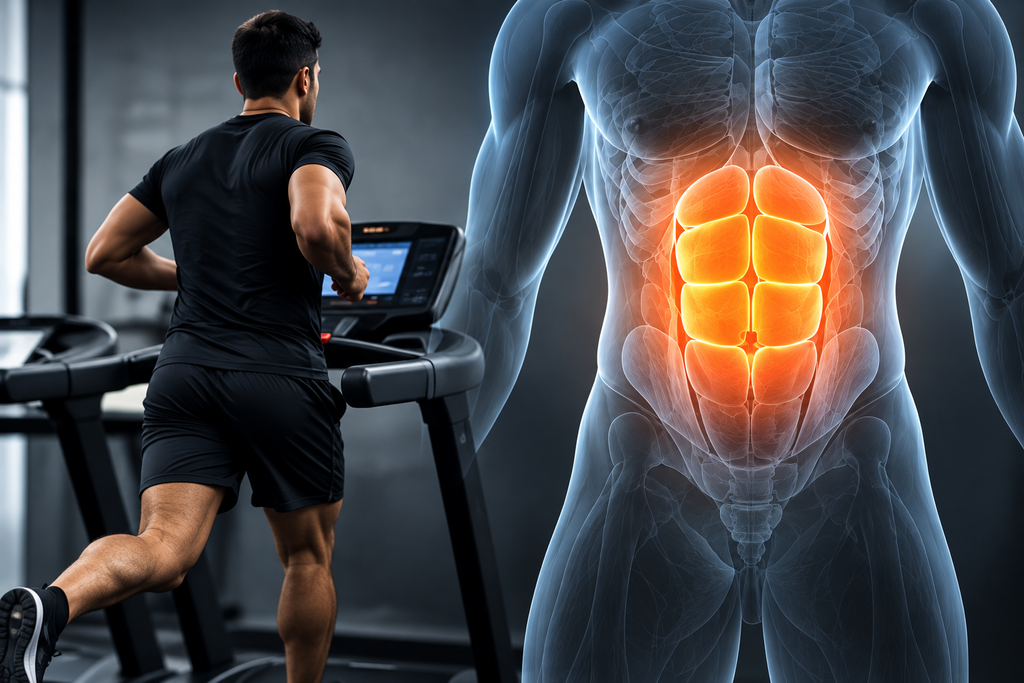
If your goal is to lose belly fat, you don’t have to choose between “doing abs” and “losing fat.”
Do both.
Train your abs. Strength train your whole body. Walk. Do cardiovascular exercise. Eat sensibly. Sleep well. Manage your stress. And give yourself time.
Don’t chase the next miracle belly-fat trick.
Build the muscle underneath. Take care of the body around it. Let the changes happen gradually.
Because the goal isn’t simply to have a smaller stomach. The goal is to build a body that is stronger, healthier and capable of carrying you through your life.
Want Help Putting All of This Together?
Knowing what works is one thing.
Knowing what to do tomorrow morning, what to eat, how much to exercise, how to progress and how to stay consistent is another. That’s exactly why we created the Sweaty Soldier Ultimate Weight Loss Program – to turn the science of sustainable weight loss into something practical that you can actually follow
THE SWEATY SOLDIER ULTIMATE WEIGHT LOSS PROGRAM → EXPLORE NOW

Medical Note
This article is for general educational purposes and is not a substitute for individual medical advice. If you have unexplained weight changes, a medical condition, are taking medication that may affect your weight, or have concerns about exercise or nutrition, speak with a qualified healthcare professional before making significant changes.