
You don’t need to do more. You need to start in a way you can actually continue.

“I’m finally serious this time.”
I hear this sentence a lot.
And usually, what comes next is something like this:
From tomorrow, no sugar. No rice. No roti at night. Two workouts a day. 10,000 steps minimum. No eating out. No cheat meals. And maybe a completely new diet that they have never followed before.
For the first few days, they feel amazing. The weight starts moving. They feel motivated. They feel disciplined. They tell themselves, “This time I am not going to stop.”
And then life happens.
Why Do We Always Want to Start So Hard?
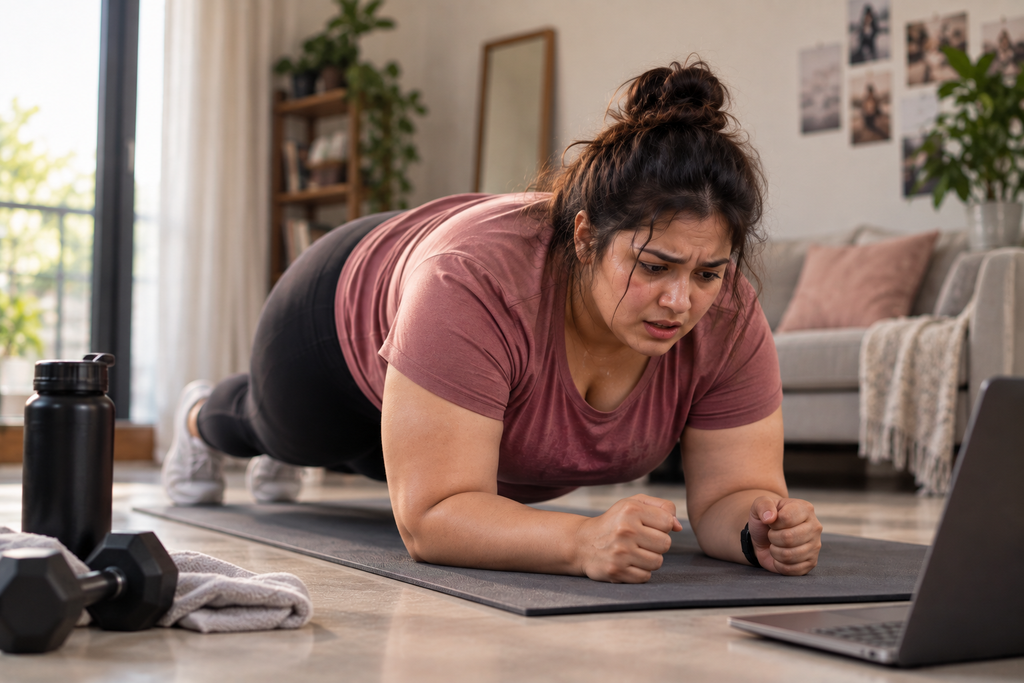
Because we want results quickly.
If you have been unhappy with your weight for six months, one year or five years, it is completely understandable that you want to fix it as quickly as possible.
So when you finally decide to lose weight, you want to do everything.
You suddenly become extremely strict with food. You start exercising every day. You increase your steps. You start drinking more water. You stop eating foods you enjoy. You wake up early. You try to sleep earlier. You start tracking everything.
And for a short period of time, it feels like you have finally taken control.
But there is a problem. You have changed almost your entire lifestyle overnight.
Your routine does too. Your family does. Your work does. Your social life does. And most importantly, your habits do. That is why starting too hard can actually become one of the biggest reasons people eventually stop.
The First Week Can Be Deceptive

When someone starts a very strict diet and exercise routine, they may see a quick drop on the weighing scale. And they think, “Wow. This is working.”
Sometimes it is. But not all of that early change is body fat. Changes in water, glycogen and the amount of food in your digestive system can also affect your weight, especially when you suddenly change how much you eat or how many carbohydrates and salty foods you consume.
So the first week can give you a lot of motivation. But it can also create a dangerous expectation.
“If I lost 2 kg this week, I should keep losing 2 kg every week.”
And when that doesn’t happen, you think something has gone wrong.
Nothing necessarily went wrong. Your body is simply not a machine that produces the same result every week.
This is one reason I don’t want you judging a weight-loss plan only by what happens in the first seven days.
The Bigger Problem Is Not the Diet. It Is the All-or-Nothing Thinking.
This is where I think many people get stuck.
“I ate more than I planned today. Tomorrow I’ll get back to my routine.”
The problem is not that you ate more today. The problem is when one imperfect meal becomes an excuse to abandon the whole plan.
Real life will interrupt your routine. There will be birthdays, weddings, travel, dinners, work pressure, late nights and days when you simply do not feel like exercising.
A good weight-loss plan has to survive those days.
You should not need a perfect week to make progress.
You need a plan that can bend without completely breaking.
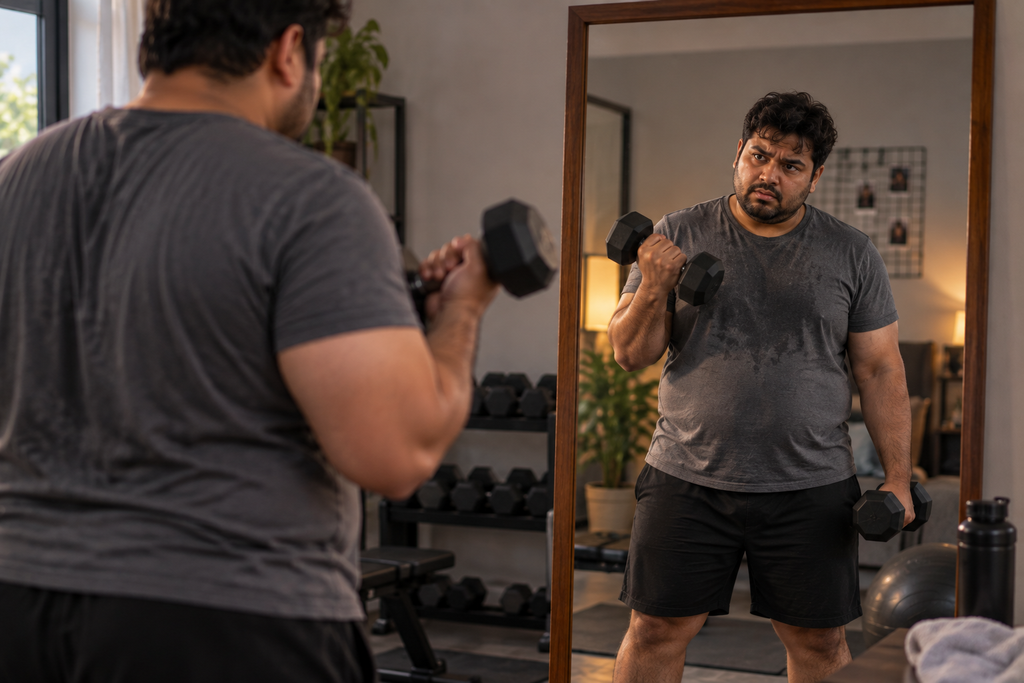
That is also why I do not believe exercise should become punishment. You should train because you want a stronger, healthier body—not because you are trying to pay for something you ate.
Start Smaller Than Your Excitement Wants You To
This sounds simple, but it can be surprisingly difficult.
When motivation is high, you want to do everything at once. But motivation is not the thing you need to protect. You need to protect your ability to repeat the behaviour.
If you are currently doing almost no exercise, you do not need to suddenly train twice a day. Start with a level of movement you can realistically maintain and build from there.
The same applies to food. You do not need to remove every food you enjoy. You need a way of eating that supports your goals and still fits your actual life.
And if you miss one workout? Continue with the next one. If you have one meal that does not fit your plan? Continue with the next meal.
Don’t start from zero every Monday.
NIDDK also recommends starting physical activity slowly, particularly if you are not used to exercise. The point is not to prove how much you can tolerate on day one. The point is to build a routine that your body and your life can keep supporting.
What Does a Sustainable Week Actually Look Like?
It does not have to look perfect.
It might mean walking regularly, doing strength training a couple of times a week, adding some cardiovascular activity, eating mostly nutritious foods, getting enough protein and fibre, and making sleep a priority.
For adults, current CDC guidance generally recommends at least 150 minutes of moderate-intensity aerobic activity each week along with muscle-strengthening activity on at least two days. But your starting point can be different depending on your fitness, health and previous activity.
You can build toward those recommendations instead of trying to do everything immediately.
And when it comes to weight-loss goals, realistic expectations matter too. NIDDK uses losing around 5% of starting body weight over six months as one example of an initial goal. That is not a rule for everyone. It is simply a reminder that meaningful progress does not have to happen at an extreme speed.
The Goal Is Not to Be Perfect
If the answer is no, the plan probably needs to change.
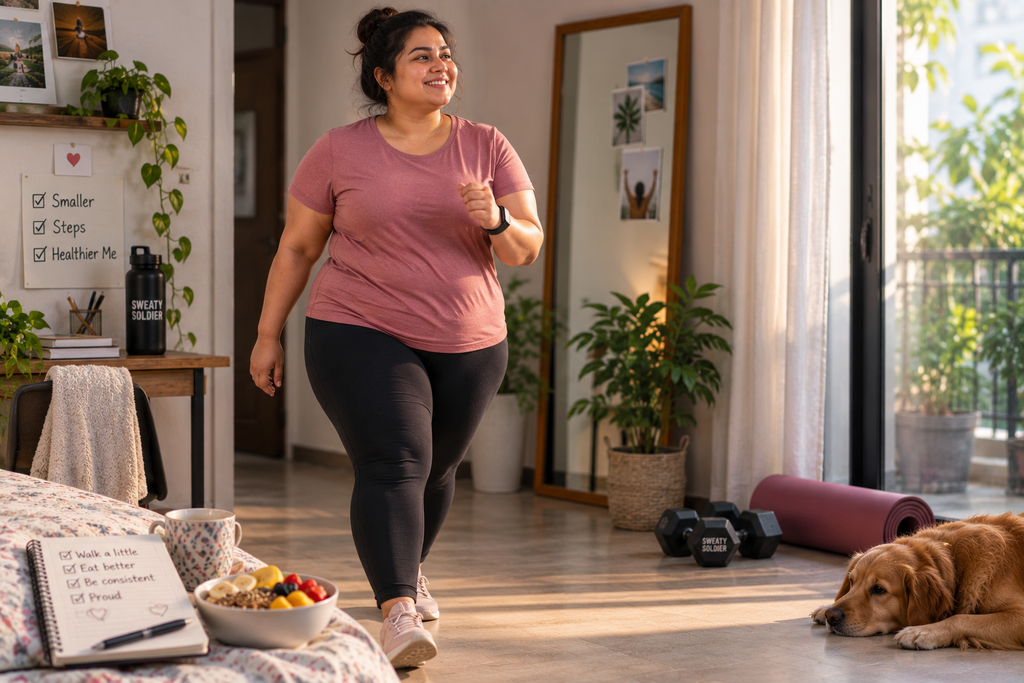
You do not need to punish yourself into losing weight. You need to build a process that works even when life is not perfect.
That is the philosophy I want you to take away from this: do less, but do it consistently. Start gradually. Build your capacity. Let your habits become normal before you keep adding more.
The best plan is not the one that looks the hardest on paper. It is the one you can still follow months from now.
And that is ultimately what sustainable weight loss is about.
Research Corner
NIDDK — Choosing a Safe & Successful Weight-loss Program: realistic goals, sustainable eating and physical activity, support, maintenance, and avoiding programs that promise extreme or unrealistic results.
NIDDK — Treatment for Overweight & Obesity: lifestyle changes, physical activity and realistic initial weight-loss goals; 5% over six months is used as one example.
CDC — Steps for Losing Weight: healthy eating, regular physical activity, enough sleep and stress management; gradual, steady weight loss is more likely to be maintained.
NIDDK — Health Tips for Adults: realistic goals, gradual progress and the understanding that setbacks are a normal part of behaviour change.
NIDDK — Tips to Keep Moving: start slowly, listen to your body and build physical activity safely.
CDC — Physical Activity and Your Weight and Health: adults generally need at least 150 minutes of moderate-intensity aerobic activity each week plus at least two days of muscle-strengthening activity.
These recommendations support the central idea of this article: weight management works better when healthy eating, physical activity and sustainable habits are built into real life rather than treated as a short-term punishment.
Want Help Putting All of This Together?
Knowing that you should start gradually is one thing. Knowing what to eat, how much to exercise, how to structure your week, how to progress and what to do when life gets in the way is another.
That’s exactly why we created the Sweaty Soldier Ultimate Weight Loss Program — to turn the science and principles of sustainable weight loss into something practical that you can actually follow.
THE SWEATY SOLDIER ULTIMATE WEIGHT LOSS PROGRAM → EXPLORE NOW

Medical Note
Weight loss can be affected by medical conditions, medications, hormones, genetics and other factors. If you have unexplained weight changes, significant symptoms, or a condition that may affect your weight or exercise ability, speak with a qualified healthcare professional before making major changes.