
You don’t need to walk 10,000 steps every day to make progress. But walking may be one of the most underrated tools for weight loss.

Let me ask you something.
If someone told you that you had to walk 10,000 steps every single day to lose weight, would you believe them?
A lot of people do.
You see it everywhere: fitness watches, phones, social media challenges and weight loss programs.
10,000 steps.
And suddenly, walking has become a number you have to “complete” before you can feel like you had a successful day.
But here is the interesting part.
10,000 steps is not a magic number for weight loss.
And that does not mean walking is ineffective.
Actually, I think walking is one of the simplest and most useful things you can add to a weight loss routine.
The important question is not:
“Did I hit 10,000 steps?”
The better question is:
“Am I moving more than I used to, and can I keep doing it?”
So, Where Did 10,000 Steps Come From?
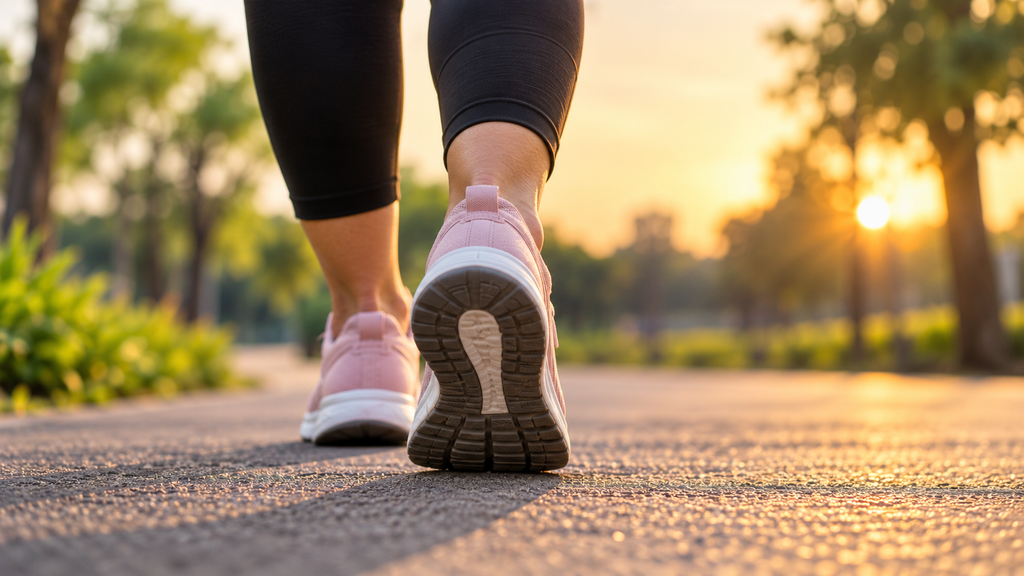
The first thing I want to clear up is that 10,000 steps is not some biological requirement that your body needs in order to burn fat.
It became popular as a simple daily activity target, and over time it became almost synonymous with being healthy.
But your body does not suddenly say:
“Congratulations. You reached 10,000. Now I will start burning fat.”
That is not how it works.
Your body uses energy throughout the day. Walking is one way of increasing the amount of energy you use.
And the more active you are compared with your usual routine, the more movement you are adding to your day.
That can be useful for weight management.
So if you currently walk 3,000 steps a day and start regularly walking 5,000, that is still a meaningful change. You don’t need to jump straight to 10,000.
What If You Are Only Walking 3,000 or 4,000 Steps?
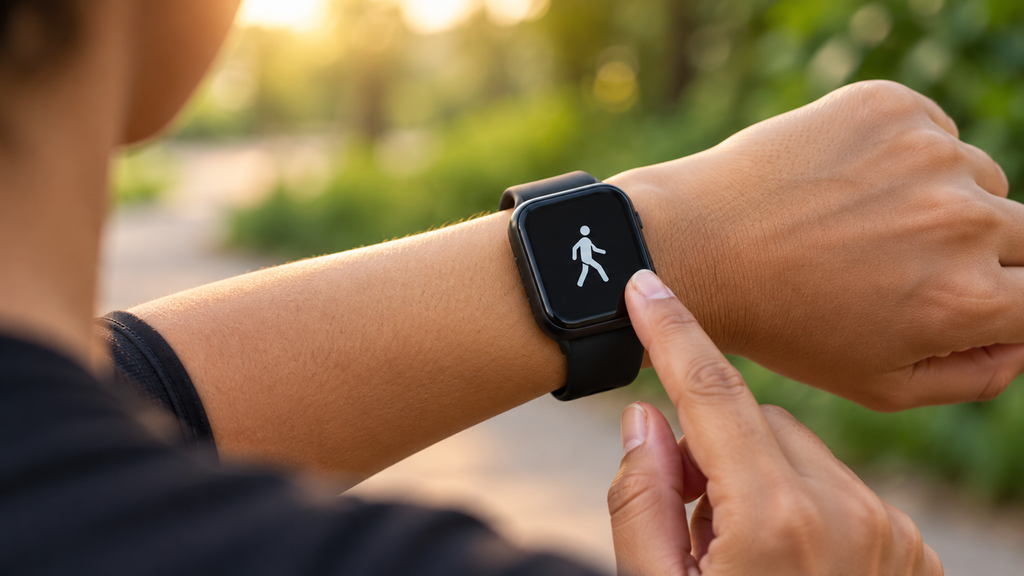
This is where I want you to stop thinking about fitness as an exam.
You don’t fail because your watch says 6,800.
If your normal day is 3,000 steps, try 4,000.
Once that feels normal, move toward 5,000.
Then 6,000.
Maybe eventually you reach 8,000 or 10,000.
Or maybe your schedule, body, work or lifestyle means another number works better for you.
That is completely fine.
Starting with small amounts of activity and gradually increasing them can make physical activity easier to maintain.
This is actually very similar to what we talked about in the previous blog.
Don’t start so hard that you cannot continue. Walking is a perfect example of that.
The Walking You Do Outside the Gym Counts Too
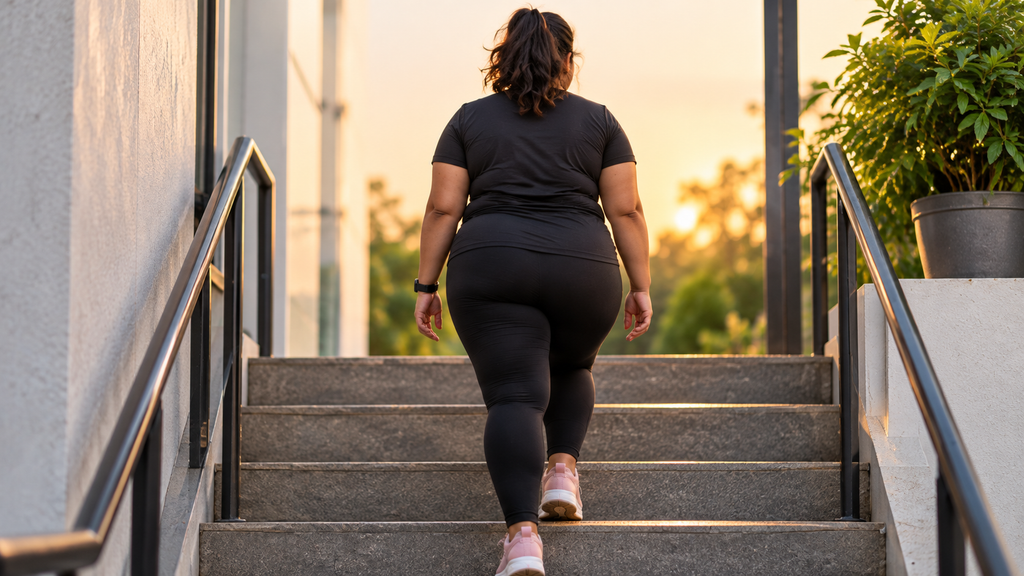
This is something I really want people to understand.
Exercise isn’t only what happens when you change into your workout clothes.
Walking to the market.
Taking the stairs.
Walking while talking on the phone.
Walking after dinner.
Walking your dog.
Parking slightly farther away.
Walking around the office.
Doing household work.
These things all contribute to your overall movement.
So instead of thinking:
“I don’t have one hour to exercise.”
Think:
“Where can I add more movement to the day I already have?” That is a very different way of looking at fitness.
And Here Is Where Walking Gets Really Interesting

Walking is relatively simple.
You don’t need a gym membership.
You don’t need expensive equipment.
You don’t need to know how to perform complicated exercises.
You can walk outside, on a treadmill, around your house, in a park or even break it into smaller walks throughout the day.
Imagine this:
10 minutes after breakfast.
10 minutes during your lunch break.
15 minutes after dinner.
That’s 35 minutes of walking without needing to find one uninterrupted 35 minute block. This is what I mean when I say that weight loss has to fit into your life.
But Don’t Make Walking Your Entire Weight Loss Plan

This is important.
Walking is fantastic.
But if your entire plan is:
“I’ll walk 10,000 steps and eat whatever I want.”
then you may become frustrated.
Weight loss is influenced by your overall energy intake and expenditure, and a sustainable approach usually combines nutrition with physical activity.
And there is another thing I don’t want you to forget.
Strength training.
If your goal is not simply to see a smaller number on the scale but to build a stronger, healthier body, resistance training deserves a place in your routine.
Walking can be your foundation.
Strength training can complement it. And your food supports both.
What About People Who Hate Walking?
Then don’t force yourself to walk for an hour.
Seriously.
There are many ways to become physically active.
Cycling.
Dancing.
Swimming.
Sports.
Strength training.
Hiking.
Group classes.
Even active hobbies.
The best exercise is not necessarily the one that burns the most calories in the shortest amount of time. Sometimes the best exercise is the one you actually keep doing.
So, How Many Steps Should You Actually Aim For?

Instead of giving everyone the same number, I would rather you look at your current activity.
If you are barely moving:
Start with 10 to 15 minutes of walking.
If you already walk regularly:
Add a little more.
If you are comfortable around 5,000 steps:
Try gradually moving toward 6,000 or 7,000.
If 10,000 feels comfortable and fits naturally into your lifestyle:
Great. Keep it.
But don’t turn 10,000 into a punishment.
You don’t need to walk another 3,000 steps at 11:30 at night because your watch says 7,000.
Your goal is not to win against your fitness tracker. Your goal is to become a person who moves regularly.
What Can 1,000 Steps Actually Do?
Now let’s make this practical.
People often look at their step count and wonder, “How many calories did I actually burn?” There is no exact number because calorie expenditure depends on your body weight, walking speed, stride length, terrain and several other factors. But as a rough estimate, walking can burn around 1 calorie per 20 steps, which would put 1,000 steps at roughly 50 calories.
1,000 steps ≈ 50 calories
5,000 steps ≈ 250 calories
8,000 steps ≈ 400 calories
10,000 steps ≈ 500 calories
But please don’t treat these numbers like a calorie calculator. Your actual number can be quite different.
Now let’s say you are consistently walking 10,000 steps a day and your food intake is also under control.
If your walking created roughly a 500 calorie daily expenditure, that’s about 3,500 calories over a week. In simple calorie mathematics, that could correspond to roughly 0.45 kg of body fat. Over four weeks, that is around 1.8 kg from that theoretical deficit alone.
But here’s the important part.
That does not mean everyone who walks 10,000 steps will lose exactly 1.8 kg in a month.
Your body is not a calculator where you put in 3,500 calories and automatically get 0.45 kg of fat loss. Your food intake, body size, metabolism, activity level, water retention and changes in appetite all affect the result.
And if you are also eating in a sensible calorie deficit, your total weight loss could be greater because food and activity work together.
For most people, a realistic way to think about weight loss is not “10,000 steps = X kg.”
Think of it like this:
Walking creates additional calorie expenditure.
Food determines how much of that deficit you maintain.
Consistency determines whether you actually see the result.
The CDC notes that gradual weight loss of around 1 to 2 pounds per week, roughly 0.45 to 0.9 kg, is generally more sustainable for many adults.
So yes, walking can absolutely contribute to weight loss.
But don’t look at 10,000 steps as a magic fat burning number.
Look at it as one tool that helps you create a sustainable calorie deficit without having to punish yourself with extreme workouts.
What If You Miss Your Steps?

Nothing.
Seriously.
You don’t need to “make up” for yesterday.
Maybe you had a busy workday.
Maybe it rained.
Maybe you were travelling.
Maybe you were tired.
Maybe your body needed rest.
Just continue tomorrow.
This is another reason I like walking so much.
It is easy to restart.
You don’t need a Monday.
You don’t need a new month.
You don’t need a new challenge.
You can simply put on your shoes and go for a walk.
The Real Goal Is Not 10,000 Steps
I think this is the part I want you to remember.
If 10,000 steps makes you more active, great.
But if chasing 10,000 makes you feel like a failure every day you don’t reach it, then the number has stopped helping you.
Maybe your first goal is 5,000.
Maybe your goal is a 15 minute walk after dinner.
Maybe it is walking while taking your phone calls.
Maybe it is getting up from your desk every hour.
These small things can become part of your normal life.
And once they become normal, you can build from there.
Don’t underestimate small amounts of movement simply because they don’t look impressive on Instagram.
A person who walks 5,000 steps consistently is doing something very different from someone who walks 12,000 steps twice and then spends the next five days doing almost nothing. Consistency matters.
Research Corner
NIDDK explains that regular physical activity can help with weight management and recommends at least 150 minutes of moderate intensity aerobic activity per week for healthy adults, along with muscle strengthening activity on at least two days.
NIDDK also recommends starting slowly and increasing physical activity gradually. For people who are new to exercise, even short periods of activity can be a practical starting point.
Walking can be an accessible form of physical activity that supports overall health and fitness. It can also be broken into shorter sessions when a long walk does not fit into your schedule.
And remember that physical activity has benefits beyond weight loss. Being active can improve health even when the scale does not change.
Want Help Putting This Into Your Routine?
Knowing that walking is useful is easy.
The harder part is knowing how much to walk, when to walk, what to eat, when to strength train and how to structure everything around your actual life.
That’s exactly why we created the Sweaty Soldier Ultimate Weight Loss Program, to turn the principles of sustainable weight loss into something practical that you can actually follow.
THE SWEATY SOLDIER ULTIMATE WEIGHT LOSS PROGRAM → EXPLORE NOW

Medical Note
If you have a medical condition, injury, significant joint pain, heart disease, diabetes, high blood pressure or another health concern, speak with a qualified healthcare professional about what type and amount of physical activity is appropriate for you.